
For today’s real estate investor, C-PACE is becoming an essential part of the capital stack
For commercial real estate owners and developers seeking financing for their projects, navigating today’s capital markets has become an exercise in endurance, perseverance, and precision. Higher interest rates, tighter underwriting standards, and rising construction costs have increased pressure on projects across virtually every asset class. Meanwhile, all stakeholders expect new buildings to deliver stronger energy performance with strategic, long-term sustainability and resiliency measures considered at every stage of construction. Commercial Property Assessed Clean Energy (C-PACE) financing has emerged as one of the most effective tools for solving all these challenges simultaneously.
Originally associated with retrofits and energy upgrades, C-PACE is now playing a transformative role in ground-up development projects nationwide. From multifamily and hotel developments to senior living communities, developers are increasingly using C-PACE to fill funding gaps, to enhance returns by reducing capital costs, and to build higher-performing properties.
Below, we answer some of the most common questions about how C-PACE works for new construction and why it has become an increasingly attractive addition to the modern development capital stack.
What is C-PACE financing?
C-PACE is a financing mechanism that enables commercial property owners and developers to fund 100% of the cost of eligible sustainability and resiliency improvements through a voluntary property tax assessment.
In the context of new construction, C-PACE can finance a wide range of building systems and measures that improve efficiency, resiliency, or environmental performance, including HVAC systems, building envelope improvements, lighting, water conservation systems including green roofs, renewable energy, and more.
Typical features of C-PACE financing:
- Long-term (often up to 30 years)
- Fixed rate
- Non-recourse
- No payments until stabilization
- No financial covenants or restrictions
- Runs with the land and is transferable upon sale
- Repaid with property taxes
This structure allows developers to match repayment obligations with the useful life of the eligible building measures that are being financed.
Why is C-PACE particularly attractive for new construction projects today?
In today’s market environment, developers face mounting pressure from higher construction costs, elevated interest rates, and increasing equity requirements. Concurrently, many traditional financing sources have adopted more conservative leverage parameters. As a result, C-PACE has emerged as an attractive capital solution that can improve new construction project economics and support investments in energy efficiency and resiliency.
C-PACE addresses several key challenges by:
Reducing the need for recourse in capital stack
A C-PACE assessment is levied by the local government and secured by the underlying property, eliminating the need for personal guarantees. This eases the negotiations for a non-recourse construction loan to complete the cap stack, instead of using preferred equity to avoid recourse. In addition, the C-PACE interest payments until stabilization are capitalized into the assessment, providing a cushion that may lead to lower personal recourse demands. In addition, there are completion guarantees, and no DSCR or other financial covenants that might trigger personal recourse.
Capital Stacking with reduced risk
C-PACE has no restrictive debt covenants or default risks other than nonpayment once the municipality places the assessment on the tax rolls, which is generally planned at stabilization. Some new construction may entail a repayment waterfall if a residential (single family or condo) property is involved. However, most C-PACE transactions either have no complex repayment waterfalls, or they have the option of no forced payouts with 30-year self-amortization schedules that provide an option of construction to permanent financing. C-PACE has no default acceleration clauses. The long-term financing also provides a buffer period to stabilize if cap rates shift to reduce development risk.
Avoiding Restrictive Covenants and Intercreditor Agreement
C-PACE financing does not limit your ability to refinance, bring in additional financing, sell property, or other covenants that are typically associated with mezzanine debt. If the project goes sideways, there are no intercreditor agreements that could create conflicts and delay resolution, since the PACE assessment is levied through an agreement with the local government.
Offering Interest Rate Protection
Fixed rate C-PACE allows for the prediction of cash flows without purchasing interest rate cap or swaps. Think the market will tighten? C-PACE is very flexible financing tool with many structuring options.
Reducing overall cost of capital
Since C-PACE is secured by the property and generates tax revenue for the municipality, interest rates are often lower than many other construction loan options and often on par with recourse bank financing or Agency financing. The resulting payment profile can improve project cash flow and reduce financing costs on a blended basis. By introducing a lower-cost source of capital into the stack, developers may be able to enhance project economics without increasing reliance on higher-cost debt or additional equity.
Streamlining the review process
Third party reports ordered by the senior lender are almost always utilized by the C-PACE capital provider; the C-PACE technical review, which can take 3 to 4 weeks (shorter if the energy modeling was performed for another green certification), is the only additional third-party report. Transaction documents are standardized from the municipality or program with limited ability to edit.
Replacing more expensive equity
In many jurisdictions, C-PACE can finance 20% to 35% of eligible project costs, depending on program parameters and project design. This additional source of capital may reduce sponsor equity requirements and enhance leverage efficiency, allowing developers to optimize project capitalization.
Supporting higher-performing buildings
As building codes continue to evolve and utility costs become increasingly volatile, developers are placing greater emphasis on energy efficiency, resiliency, and long-term operational sustainability during the initial design and construction phases of projects.
In most jurisdictions, statutory savings-to-investment ratio requirements mandate that projected C-PACE-enabled utility and operational savings exceed the associated repayment obligations, beginning in the first year of operations. This structure is intended to help ensure that financed improvements contribute positively to overall building operating economics while supporting enhanced energy performance and resiliency over the life of the asset.
Having C-PACE sustainable finance experts identify utility cost savings measures
C-PACE capital providers are required to have an in-depth understanding of energy, water, structural, and stormwater systems as part of the underwriting process. Every project and measure contemplated requires a cost benefit analysis or financial feasibility study that leads to the capital provider to directly engage with architects, engineers, and developers to identify additional utility cost savings.
C-PACE capital providers and their underwriting teams strive to reduce operating expenses on every project, incorporating the financing of sustainable real estate with life insurance or equivalent high quality real estate credit underwriting.
Addressing the Split Incentive
C-PACE financing helps address the traditional split incentive by aligning repayment obligations with the useful life of the financed improvements. Because the assessment remains with the property, owners are not necessarily required to recover the full cost of eligible improvements during their individual holding period.
In many jurisdictions, projected utility savings are expected to exceed annual C-PACE repayment obligations. In addition, for certain triple-net lease structures, and where it is permitted by applicable law and lease terms, C-PACE assessments may be recoverable through tenant reimbursements, further aligning long-term costs and benefits.
Aligning with long-term asset value creation
Efficient, sustainable buildings often benefit from:
- Lower operating costs
- Stronger tenant demand
- Improved durability and resiliency
- Enhanced marketability to institutional investors
For many sponsors, C-PACE has now evolved from a niche sustainability tool into a strategic capital markets solution.
How does C-PACE fit into the construction capital stack?
C-PACE is typically incorporated into a project’s capital structure alongside senior construction financing and sponsor equity.
Because the assessment is subordinate to the senior mortgage and repaid through the property tax system, it generally functions as a complementary source of capital rather than a competing financing instrument.
In many cases, developers use C-PACE to:
- Reduce mezzanine debt requirements
- Replace preferred equity
- Lower the weighted average cost of capital
- Increase project liquidity during construction
As lenders, investors, and capital partners have become more familiar with the product, C-PACE has gained broad acceptance as a capital source for both middle-market and institutional-scale developments.
What types of projects are using C-PACE for new construction?
The market has expanded rapidly across multiple asset classes, including:
- Multifamily
- Hospitality
- Office
- Industrial
- Assisted Living
- Entertainment and production facilities
- Mixed-use developments
- Healthcare
Two recent CounterpointeSRE transactions illustrate how developers are using C-PACE at scale for transformative new construction projects:
CounterpointeSRE provided $156 million in C-PACE financing for Echelon Studios, a two-campus film and television production development in Brooklyn. The transaction represents the largest C-PACE financing completed in New York State and the first C-PACE financing for new construction in New York City.
How was C-PACE used at Echelon Studios in Brooklyn?
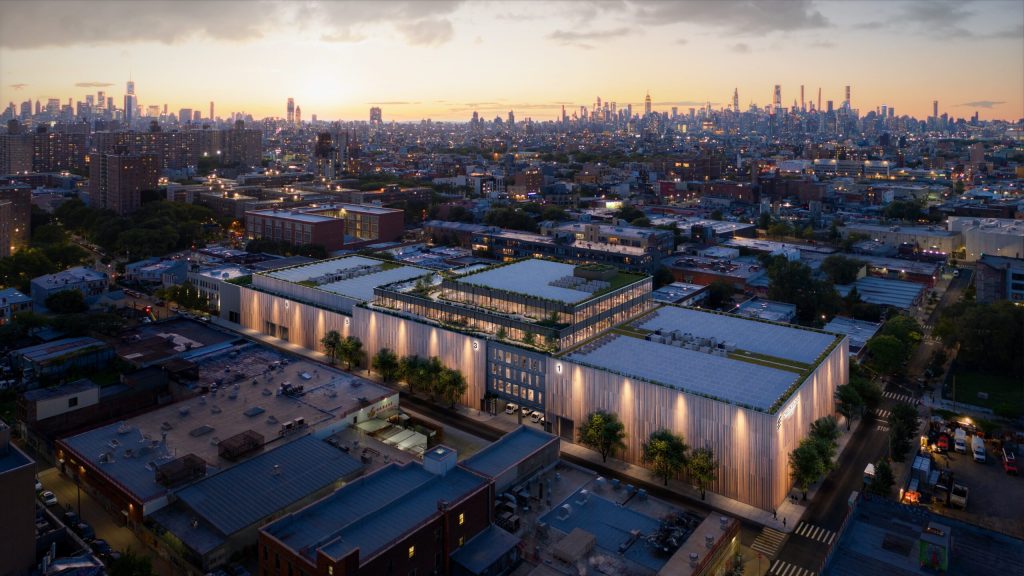
The financing supports the development of:
- Combined 10 state-of-the-art sound stages with almost 300,000 sq. ft. of support, office, and mill space
- Projected 25% on-site power generation through 1,254 kW combined solar systems
The building will be fully electric with the design achieving greater than 15% energy performance over NYC code.
The transaction demonstrates how C-PACE can support highly specialized, institutional-quality developments where long-term operating efficiency and capital stack optimization are both critical.
For large-scale developments like Echelon Studios, incorporating C-PACE allowed the project team to align long-duration financing with long-lived building systems while preserving flexibility elsewhere in the capital stack.
Learn more about this transaction here: https://counterpointesre.com/largest-nyc-c-pace-with-156-million-from-new-construction/
How was C-PACE used at Harper Square in Philadelphia?
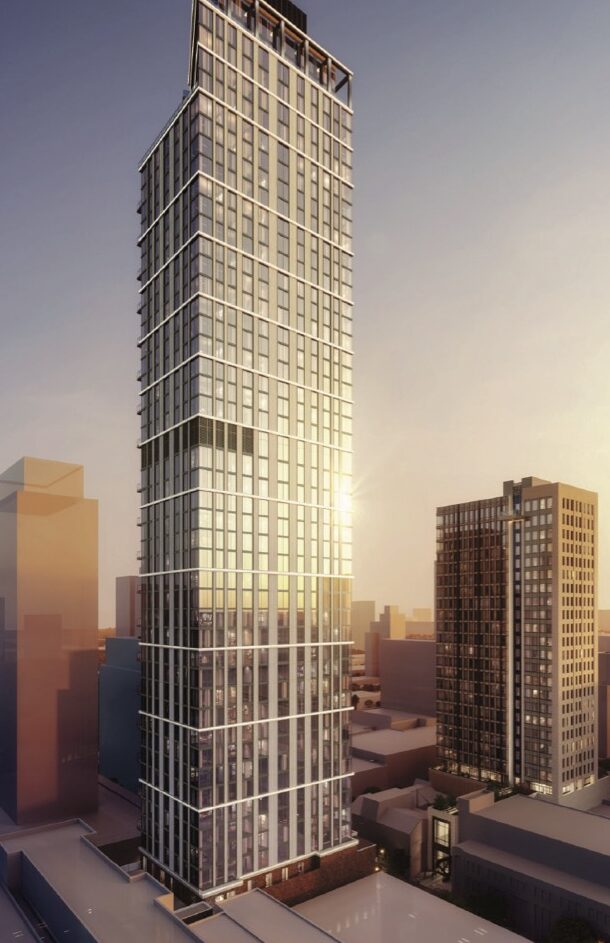
CounterpointeSRE also originated a $60 million C-PACE assessment for Harper Square, a 45-story multifamily development overlooking Rittenhouse Square in Philadelphia. At closing, the transaction represented the largest C-PACE financing completed in Pennsylvania and highlights the increasing utilization of C-PACE within institutional-quality residential developments. The project was subsequently recognized by the Philadelphia Business Journal as the Best Real Estate Financing Deal of 2025.
The 362,000-square-foot development will become Philadelphia’s tallest apartment tower upon completion and includes multiple energy efficiency measure, including:
- Energy recovery systems
- Building automation systems
- Air-cooled heat pumps
The project is expected to use approximately 36% less energy than required by local building energy code.
Harper Square reflects a broader trend among sophisticated multifamily developers: using C-PACE not only to finance sustainability improvements, but to build more resilient and operationally efficient assets in premier urban markets.
Learn more about this transaction here: https://counterpointesre.com/wp-content/uploads/2026/03/Harper-Square_Flyer_3.6.26.pdf
Is C-PACE only about sustainability?
Sustainability remains central to the program, but the conversation, along with the pool of C-PACE eligible measures and financing structure templates, has evolved significantly.
Today, developers increasingly view C-PACE as both:
- A sustainability financing solution
- A strategic capital formation tool
Buildings that consume less energy, operate more efficiently, and incorporate resiliency measures are often better positioned for the future. As cities adopt stricter energy regulations and investors continue prioritizing high-performance assets with protection against fluctuating energy prices and damages related to extreme weather, C-PACE is emerging as a transformational financing option with impact above and beyond improving a project’s sustainability metrics.
What does the future of C-PACE for new construction look like?
The market continues to expand rapidly across the United States as more jurisdictions adopt eligibility legislation and more institutional developers incorporate C-PACE into their financing strategies.
Accelerating C-PACE’s momentum is the convergence of several trends:
- Rising construction and capital costs
- Increased focus on building performance
- Demand for resilient infrastructure
- Growing sophistication among lenders and investors
- Tightening energy and emissions regulations
Final Thoughts
New construction projects today require more than just capital; they require capital that is durable, efficient, and aligned with long-term asset performance.
C-PACE financing equips developers with the tools to meet that challenge by providing long-term, fixed-rate financing for sustainability and resiliency measures while improving flexibility across the broader capital stack.
As projects like Echelon Studios and Harper Square demonstrate, C-PACE is no longer a niche financing product. It is increasingly being deployed on some of the country’s most ambitious and sophisticated developments.